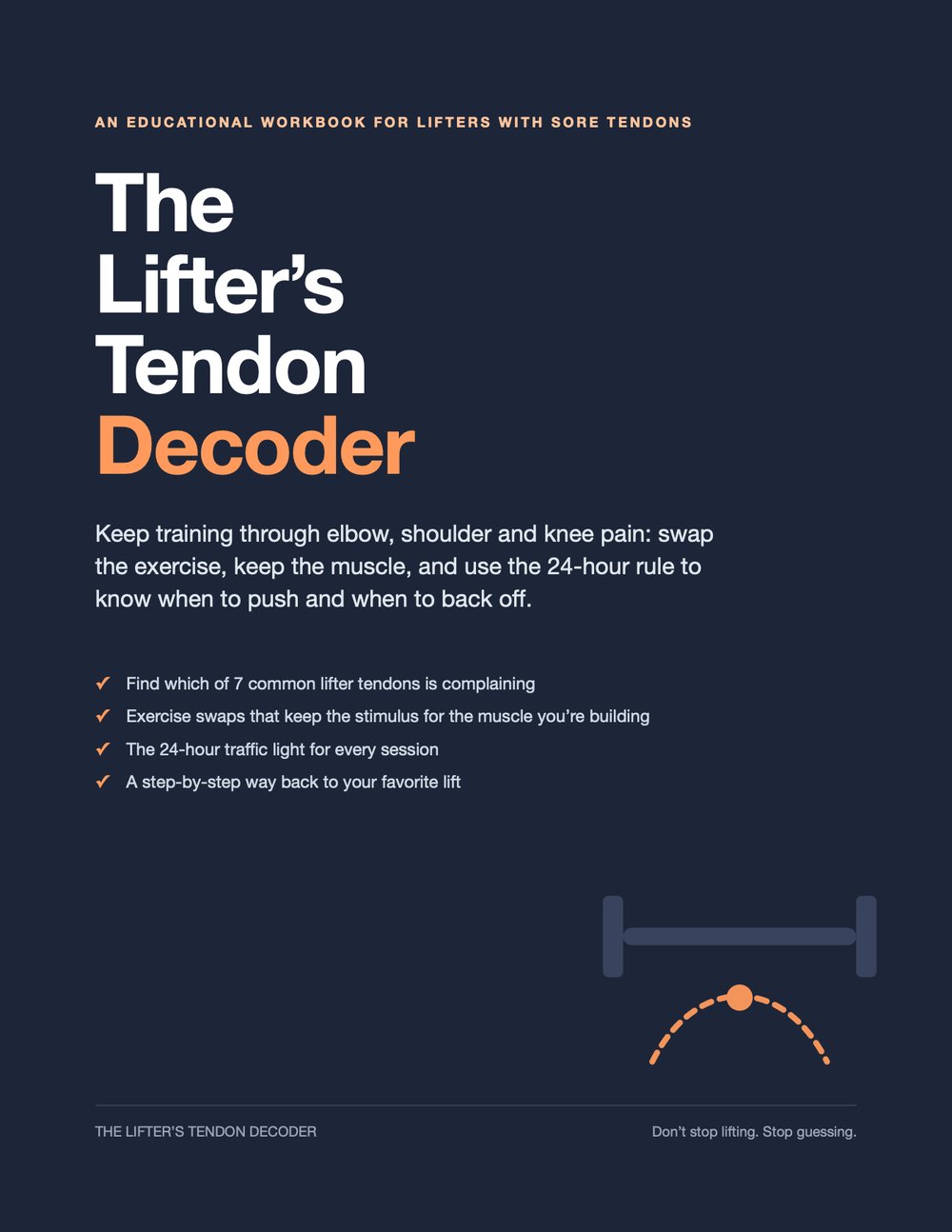
An educational workbook for lifters with tendon pain: swap the exercise, keep the muscle, and use a simple next-morning check to know when to push and when to back off. No more “just rest it for 3 months”.
You added a few sets, a new arm day or a new program. You felt strong and recovered. Two or three weeks later an elbow, a shoulder or a knee started to complain, and now every session is a guess.
The kind of thing lifters write in training communities every week.
Muscles adapt in weeks. Tendons take months.
When you add volume, your muscles keep up quickly. Your tendons are slower, so for a while you can lift more than they can comfortably handle. That gap is the classic setup for tendon pain in lifters.
Rest takes away the irritation, so pain goes down. But it doesn’t make the tendon stronger. Go back to the same exercise at the same weight and you’re asking a now-weaker tendon to do the job that irritated it in the first place. Research on tendon problems points the same way: well-dosed, gradually increasing load works better than rest alone.
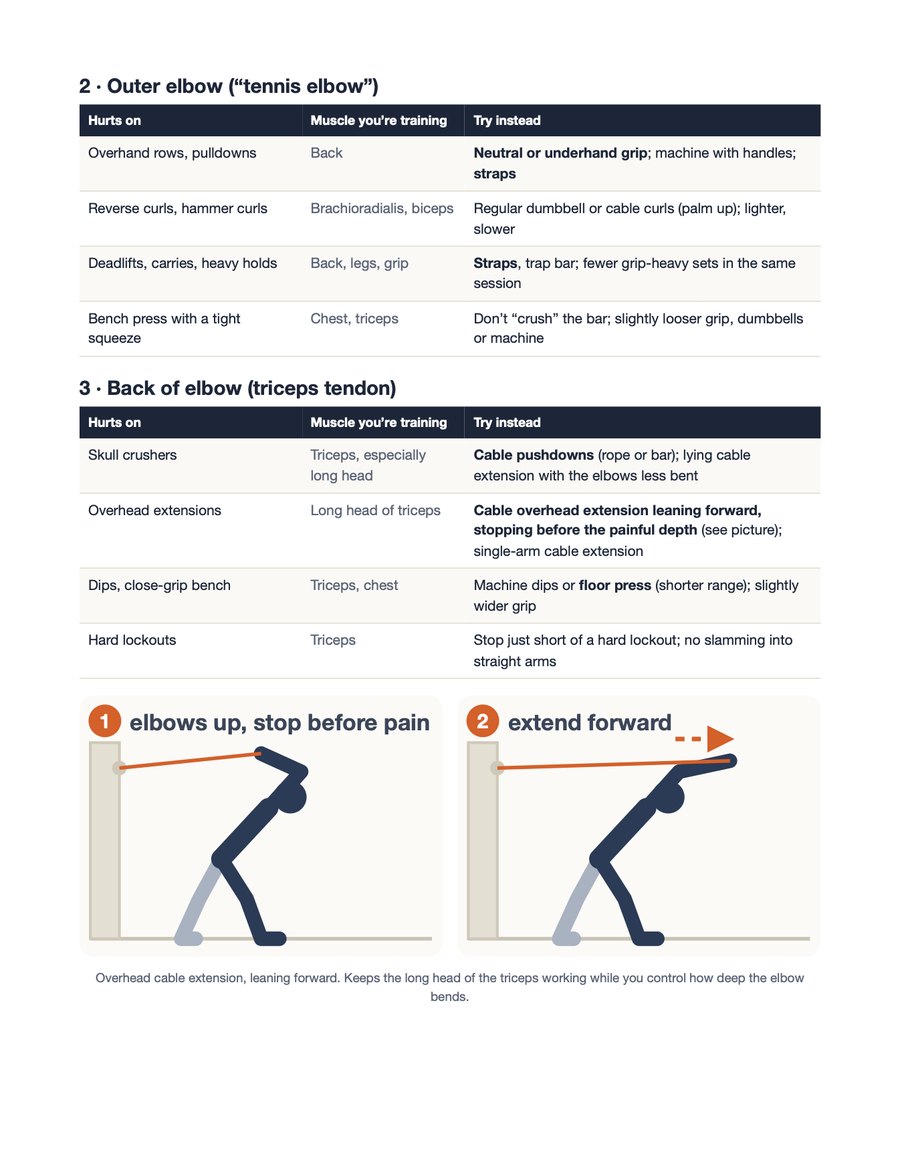
A practical workbook that combines clear explanations with tools you use in the gym, so you keep training while your tendon catches up.


Print them or fill them in on a tablet. Bring them to an appointment and a clinician sees the full picture.
Most lifters with tendon pain never had a “weak” tendon. They had a week that grew too fast.
That’s good news, because it’s fixable. Tendons get stronger with the right dose of load. You don’t have to choose between training and healing: you can train differently for a while and come back to the lifts you love.
No. It’s an educational workbook, medically reviewed by a licensed physician. It explains how overloaded tendons in lifters usually behave and gives you tools to adjust your training and track your response, so you can make better decisions, together with a clinician if needed. It does not diagnose or replace an examination.
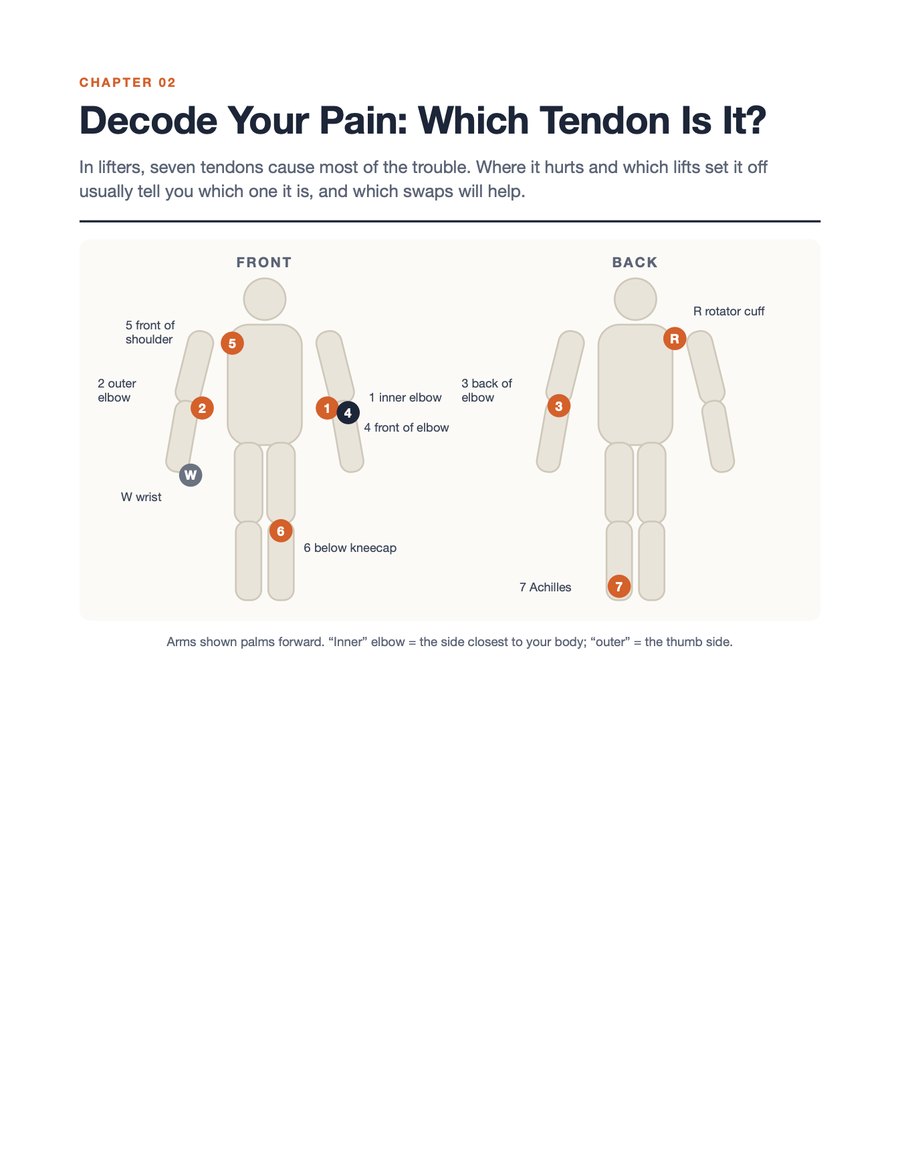
Inner elbow (“golfer’s elbow”), outer elbow (“tennis elbow”), back of the elbow (triceps tendon), front of the elbow (lower biceps tendon), front of the shoulder (long head of biceps), rotator cuff, the groin (adductor tendons), below the kneecap (patellar tendon) and the Achilles, plus a section on the wrist.
Usually not. The whole workbook is built around training differently while the tendon settles: swapping exercises, adjusting your week and adding a small dose of tendon work. The exceptions are the red-flag situations on page 2, which need a doctor first.
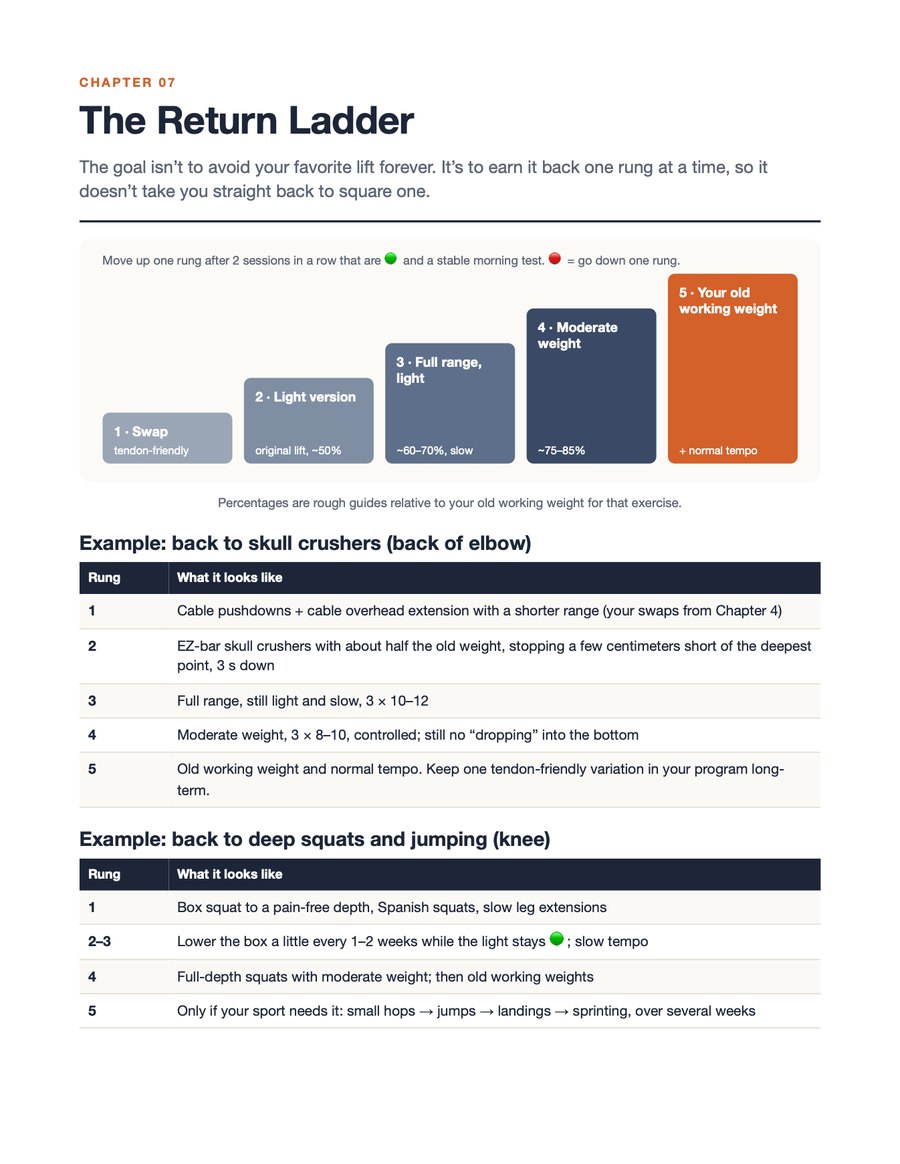
Long-standing tendon pain usually needs a planned rebuild, not just avoiding the painful lift. Chapters 5–7 are built for exactly that: steady, progressive loading over weeks to months and a clear way back to your favorite exercise.
No. Anything a normal gym has is enough: dumbbells, a cable station, a bench and a few bands. Most swaps use equipment you already use.
Right after checkout you get instant access to the download, plus a receipt email with your link. You get the 31-page workbook, the print-ready worksheets, a one-page Quick Start, the 24-Hour Rule card (also as a phone image) and a filled-in tracker example.
Email us within 30 days and you’ll get a full refund.
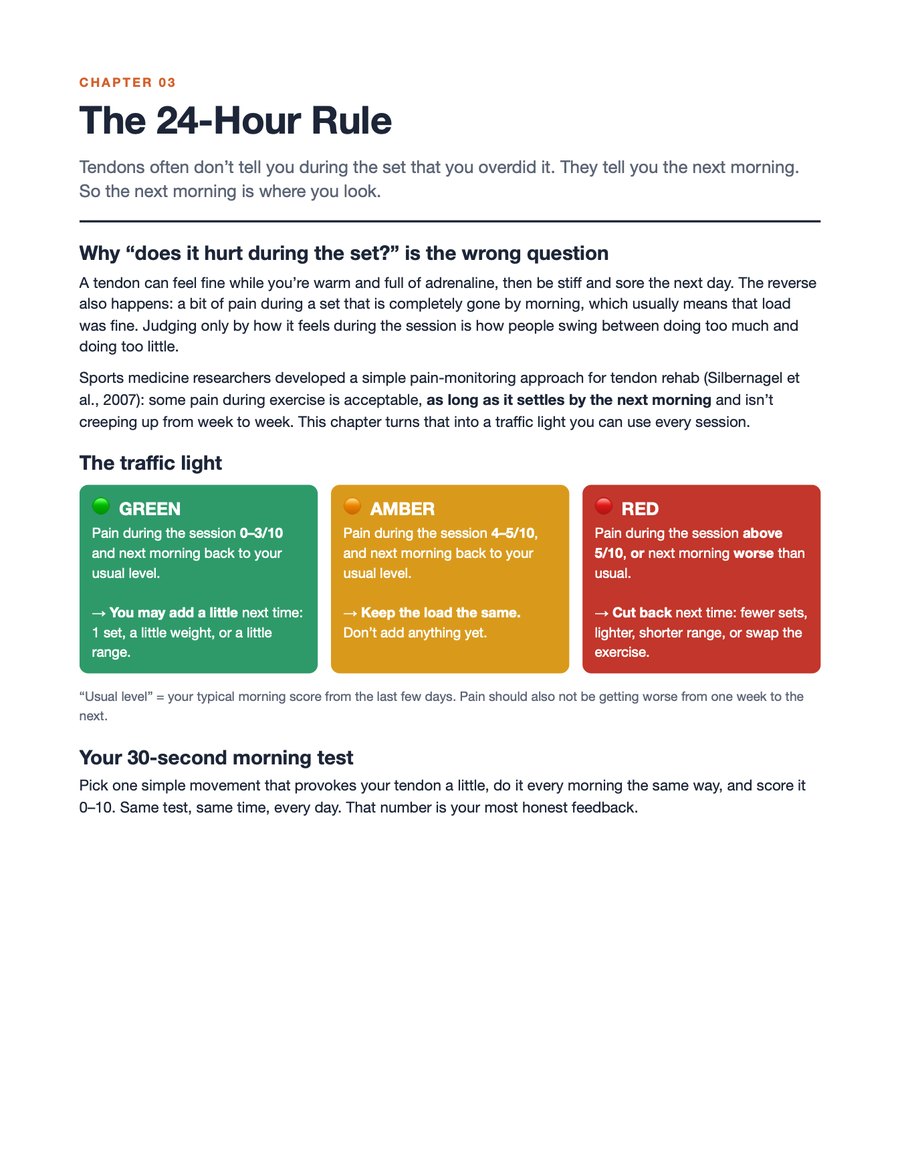
Swap the exercise. Keep the muscle. Judge it by the next morning.
Get the Tendon Decoder · $27